
Don’t Let a Power Outage Catch You Off Guard
Georgia storms can be unpredictable and unforgiving. Whether it’s a summer thunderstorm, a tropical system pushing inland, or a winter ice event, power outages in Gwinnett County can last hours — or days. For families with medical equipment, young children, or elderly household members, that’s more than an inconvenience. It’s a genuine hardship.
A whole-home standby generator changes that. Unlike portable generators that require manual setup, fuel hauling, and outdoor operation, a standby generator is permanently installed, fueled by natural gas or propane, and starts automatically within seconds of a power outage — without you having to do a thing.
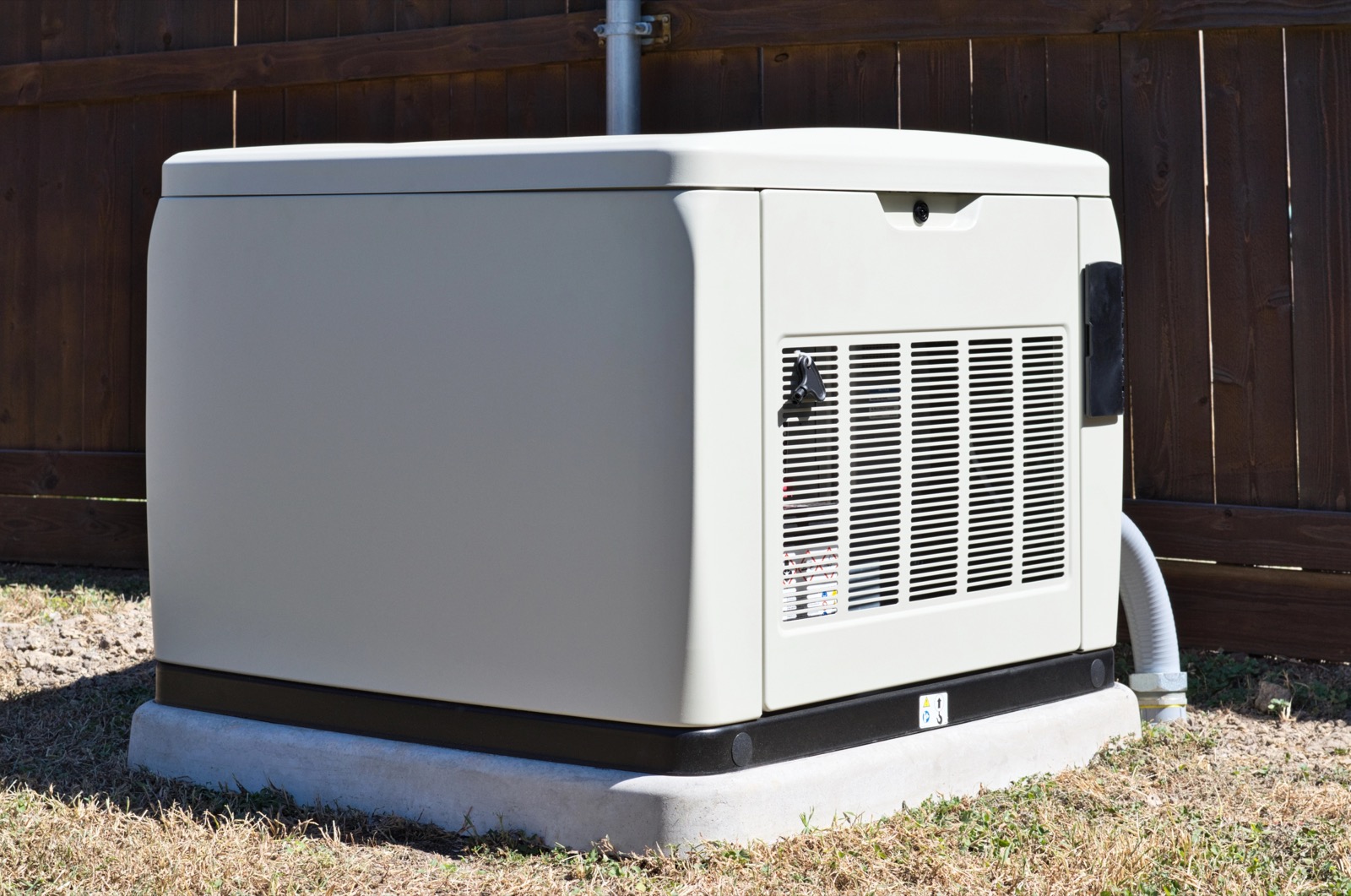
When severe weather knocks out the power, a whole-home standby generator keeps your family safe, comfortable, and in control. Safety 1st Electrical Services installs standby generator systems for homeowners throughout Peachtree Corners, Gwinnett County, and the surrounding northeast Atlanta area — professionally, safely, and to code.
How a Standby Generator System Works
A standby generator system consists of two main components: the generator unit itself and an automatic transfer switch (ATS). The ATS continuously monitors your utility power. The moment it detects an outage, it signals the generator to start and transfers your home’s electrical load from the grid to the generator — automatically, in a matter of seconds.
When utility power is restored, the ATS transfers the load back to the grid and shuts the generator down. The entire process happens on its own, whether you’re home or away.
With a properly sized system, your home can continue running as normal — air conditioning, refrigerator, lights, appliances, medical devices, and more — for as long as the outage lasts.
What We Install
Safety 1st installs whole-home and partial-home standby generator systems sized to meet your household’s specific needs. Our installation services include:
- Standby generator installation (natural gas and propane)
- Automatic transfer switch (ATS) installation
- Manual transfer switch and interlock installation for portable generators
- Dedicated generator circuits and electrical connections
- Load assessment and system sizing guidance
We work with reputable generator brands and will help you select a system that fits your home’s square footage, electrical load, and budget.
What Size Generator Does Your Home Need?
Generator sizing depends on how much of your home you want to power during an outage. A smaller system (10–20 kW) can cover essential circuits — lights, refrigerator, select outlets, and HVAC. A whole-home system (22–48 kW) can support your entire electrical load, including central air conditioning, large appliances, and electric vehicle chargers.
Getting the sizing right is critical. An undersized generator will struggle under load. An oversized one is an unnecessary expense. Before we recommend a system, we’ll assess your home’s electrical panel and discuss your priorities so you get exactly what you need.
Our Generator Installation Process
In-Home Assessment
We visit your home to evaluate your electrical panel, discuss your power needs, and determine the best location for the generator unit and transfer switch. We’ll also assess fuel source options — natural gas from your existing line or a propane tank — and address any site-specific considerations.
Written Estimate
You’ll receive a detailed, written estimate covering equipment, labor, and any associated permit fees. No surprises.
Professional Installation
Our licensed electricians handle the complete electrical installation — generator placement, transfer switch installation, dedicated wiring, and connection to your fuel source. All work is completed to Georgia electrical code.
Testing & Walkthrough
Before we leave, we test the complete system — including an automatic transfer simulation — to confirm everything is functioning correctly. We’ll walk you through how the system operates, what to expect during an outage, and how to perform basic manual overrides if needed.
Generator Installation FAQs
Can a generator power my whole house?
How often does a standby generator need maintenance?
How long does installation take?
What fuel source does a standby generator use?
Do I need a permit?
Still have more questions?
Serving Peachtree Corners, Gwinnett County & Surrounding Communities
We install standby generators for homeowners throughout Peachtree Corners, Norcross, Duluth, Johns Creek, Alpharetta, Roswell, Suwanee, Lawrenceville, and surrounding communities in the greater northeast Atlanta area.
Complimentary ConsultationCall for Service Today